


Millions participate in contact sports each year, but the intensity carries risks. While athletes often protect their heads, knees, and ankles, dental safety is frequently overlooked. A blow to the face can cause chipped, broken, or knocked-out teeth, leading to painful and expensive dental work. Despite the risks, many athletes compete without proper mouth protection.
Understanding Dental Trauma in Sports
Dental trauma refers to any injury to the teeth, gums, or soft tissue of the mouth. In the fast-paced environment of contact sports, these injuries can occur in a split second. Understanding what typically happens on the field is the first step toward better prevention.
Common Types of Dental Injuries
The severity of dental injuries can range from minor chips to severe structural damage.
- Fractured or Chipped Teeth: This is the most common injury. A blow to the face can cause a piece of the tooth to break off. While some chips are cosmetic, deeper fractures can expose the nerve, causing intense pain and requiring root canal therapy.
- Luxation: This occurs when a tooth is pushed out of its normal position. It might be pushed sideways, deeper into the socket (intrusion), or partially out of the socket (extrusion). These injuries often require splinting to stabilize the tooth.
- Avulsion: This is the clinical term for a tooth being completely knocked out. This is a dental emergency. If the tooth is handled correctly and re-implanted quickly (usually within an hour), it may be saved, but the long-term prognosis varies.
- Root Fractures: Sometimes the crack isn’t visible in the crown of the tooth but occurs below the gum line in the root. These are difficult to treat and often result in tooth loss.
Factors Increasing the Risk

Certain factors make dental trauma more likely. High-velocity sports like hockey and lacrosse carry inherent risks due to sticks and hard projectiles. Full-contact sports like football, rugby, and boxing involve direct physical collisions that endanger the face.
However, “non-contact” sports shouldn’t be ignored. Basketball and soccer see high rates of dental injuries due to accidental elbows and collisions in close quarters. Additionally, athletes with protruding upper front teeth (class II malocclusion) are at a significantly higher risk because their teeth are the first point of contact during a fall or collision.
The Importance of Prevention
Preventing dental injuries is far better—and cheaper—than treating them. The immediate pain of an injury is just the beginning; the ripple effects can last for years.
Benefits of Protecting Teeth
The primary benefit is obvious: keeping your natural teeth. Natural teeth are stronger and function better than any artificial replacement. Prevention also saves money. The cost of a good mouthguard is a fraction of the cost of a single crown, let alone an implant or bridge.
Beyond the physical and financial aspects, adequate protection provides psychological benefits. Athletes who feel safe are more likely to play with confidence and aggression (in the sporting sense), knowing they are protected against common injuries.
Long-Term Consequences of Untreated Injuries
Ignoring dental safety can lead to complex problems down the road. A tooth that sustains trauma may look fine initially but can die years later due to nerve damage, leading to infection and the need for extraction.
Missing teeth can cause the remaining teeth to shift, altering the bite and potentially causing jaw pain or issues with the temporomandibular joint (TMJ). For younger athletes, damaging a permanent tooth before it has fully developed can complicate dental development and require lifelong maintenance.
Protective Measures: Your First Line of Defense
Equipment technology has come a long way. Utilizing the right gear is the most effective way to mitigate the risk of injury.
Mouthguards
Mouthguards are the gold standard for dental protection in sports. They work by absorbing and distributing the force of an impact, preventing teeth from clashing together or acting as a buffer against soft tissue cuts.
An effective mouthguard should be:
- Resilient and tear-resistant.
- Comfortable to wear.
- Easy to clean.
- Capable of allowing the athlete to breathe and speak clearly.
Other Protective Gear
While mouthguards protect the teeth from inside, other gear protects from the outside.
- Helmets: Essential in sports like football, hockey, and baseball. A properly fitted helmet protects the skull and reduces the transmission of force to the jaw.
- Faceguards: Cages or clear visors attached to helmets offer superior protection against projectiles (like pucks or balls) and sticks. They are mandatory in many youth leagues and highly recommended for amateurs.
- Face Shields: In sports like martial arts, softer foam headgear with face cages can prevent direct trauma to the mouth area.
Choosing the Right Mouthguard
Not all mouthguards are created equal. The level of protection and comfort varies significantly depending on the type you choose.
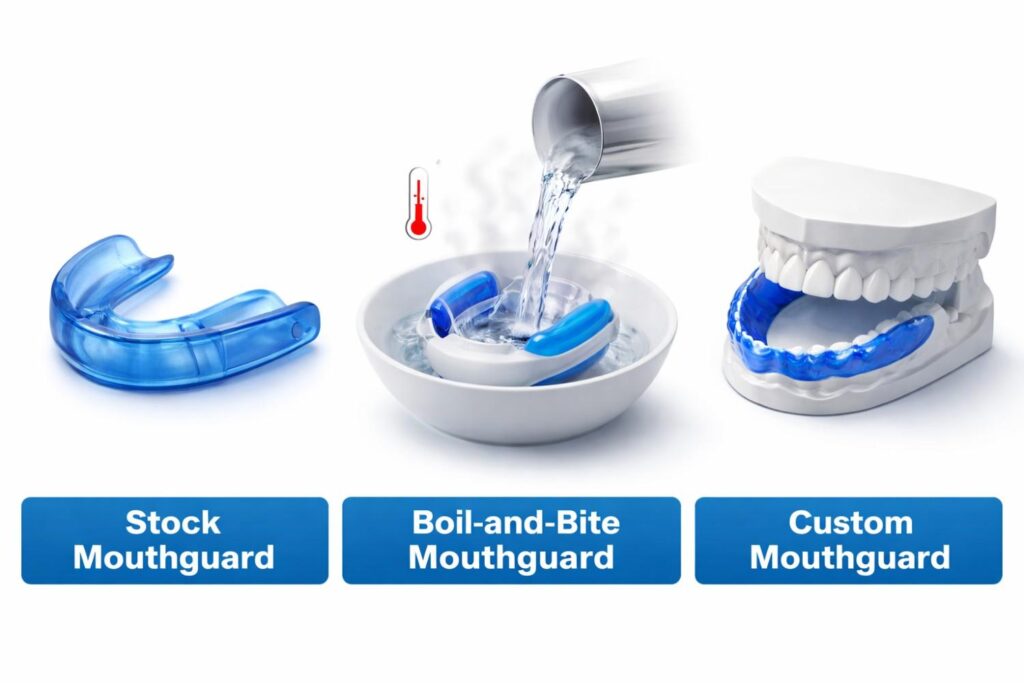
Stock Mouthguards
These are the pre-formed protectors available at most sporting goods stores. They are ready to wear right out of the package.
- Pros: They are inexpensive and easily accessible.
- Cons: They offer the least protection. Because the fit cannot be adjusted, they are often bulky, loose, and uncomfortable. Athletes often find it difficult to breathe or speak while wearing them, which leads to the player taking them out during the game—rendering them useless.
Boil-and-Bite Mouthguards
These are also available at sporting goods stores but offer a better fit than stock versions. They are made of a thermoplastic material that softens in boiling water. The athlete then bites into the warm material to shape it around their teeth.
- Pros: Better fit than stock guards and still relatively inexpensive. They are readily available and easy to mold at home.
- Cons: While better than stock, the fit can still be imprecise. Over time, the material can become thin in spots where the athlete bites down too hard during the molding process, reducing protection.
For the highest level of safety and comfort, athletes should speak to their dentist about a custom mouthguard, which is fabricated based on a precise impression of the athlete’s teeth.
Care and Maintenance
A mouthguard is a piece of medical equipment and should be treated with care to ensure it remains effective and hygienic.
- Cleaning: Rinse the mouthguard with cold water or a mouth rinse before and after each use. Occasionally, clean it with mild soap and cool water. Avoid hot water, as it can distort the shape.
- Storage: Store the mouthguard in a sturdy, perforated container. This allows air to circulate and prevents bacteria growth while protecting it from physical damage (like being crushed in a gym bag).
- Heat Protection: Keep the mouthguard away from high temperatures. Don’t leave it in a hot car or direct sunlight.
- Replacement: Mouthguards don’t last forever. Check for wear and tear regularly. If it shows signs of holes, tears, or becomes loose, it needs to be replaced. For growing children and adolescents, mouthguards may need to be replaced more frequently as their teeth move and jaws grow.
Conclusion
Dental injuries are a frequent and painful reality of contact sports, but they are largely preventable. By understanding the risks and investing in proper protective equipment, athletes can safeguard their oral health without sacrificing their performance.
