


Running a successful company requires much more than just securing high sales numbers. You need actual money in the bank to pay your team, cover rent, and purchase inventory. Many entrepreneurs focus entirely on their profit margins while ignoring the physical movement of money. This oversight frequently leads to intense financial stress, even for companies that appear highly successful on paper.
Cash Flow vs. Profit: What You Need to Know
A common mistake business owners make is assuming that profit and cash flow are the exact same metric. They are actually two distinct financial indicators. Profit is simply your total revenue minus your total expenses. You can calculate profit over a month, a quarter, or a year. It tells you if your business model is fundamentally sound.
Cash flow refers to the specific timing of money moving in and out of your business accounts. You might close a massive $100,000 deal in January, making your business highly profitable for that month. However, if the client has 90 days to pay the invoice, you will not see that money until April. If you have $50,000 in expenses due in February, your profitable business will suddenly face a severe cash shortage.
Recognizing this difference is the first step toward financial stability. You must align your incoming revenue with your outgoing expenses to ensure you always have enough liquid capital on hand.
Optimize Your Accounts Receivable
Getting paid faster directly improves your bank balance. Many businesses suffer simply because they allow clients too much leeway when it comes to settling invoices. Taking control of your accounts receivable will drastically reduce the time you spend waiting for funds.
Automate Your Invoicing Process
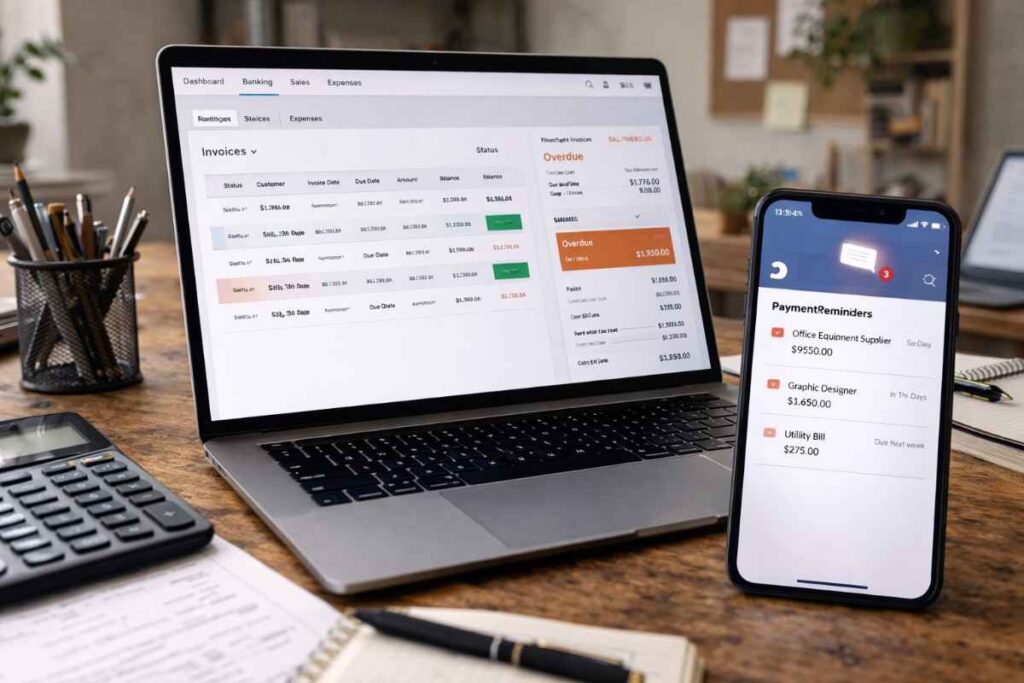
Manual invoicing leaves too much room for human error and delays. If you wait until the end of the month to manually type out and send bills, you are unnecessarily delaying your own payments. Implement accounting software that generates and sends invoices the moment a project is completed or a product is delivered.
Providing clients with immediate, easy-to-use digital payment links encourages them to settle their balances right away.
Set Up Consistent Follow-ups
Clients often forget to pay invoices. They get busy, the email gets buried, or the paperwork gets misplaced on a desk. Instead of letting unpaid bills pile up, use your accounting software to send automated reminders.
Schedule a polite email reminder three days before an invoice is due, another on the due date, and regular check-ins for any past-due amounts. Clear, consistent communication trains your clients to prioritize your invoices.
Manage Accounts Payable Smartly
Just as you want money to come in quickly, you should be strategic about how money leaves your business. Managing your accounts payable is about keeping cash in your accounts for as long as possible without damaging relationships with your vendors.
Negotiate Better Payment Terms
Reach out to your regular suppliers and discuss your payment terms. If you currently pay upon receipt, ask if you can shift to net-30 or net-60 terms. Vendors are often willing to extend payment windows for reliable, long-term clients.
Extending your payable deadlines gives you a larger window to collect your own receivables before you have to part with your cash.
Prioritize Critical Bills
Not all expenses carry the same weight. Payroll, taxes, and essential utilities must be paid on time to keep your doors open and avoid severe penalties. Other bills might offer grace periods or carry very small late fees. When cash gets tight, categorize your payables by urgency.
Pay the critical bills immediately and strategically schedule the rest based on exactly when your next client payments are set to arrive.
Leverage Short-Term Financing
Even with excellent management, unexpected expenses or sudden growth opportunities can drain your reserves. Having access to external capital acts as a vital safety net for your operations. Short-term financing allows you to bridge temporary gaps without giving up equity or taking on decades of debt.

Business lines of credit are incredibly useful because you only pay interest on the money you actually draw. You can set up a line of credit while your financials are strong and leave it untouched until an emergency strikes. Depending on your location and credit profile, there are many localized options available.
For example, some regional banks and credit unions offer easy approval loans in Idaho that cater specifically to the seasonal cash fluctuations of local small businesses. Securing these options ahead of time ensures you are never caught off guard.
Cut Unnecessary Overhead Costs
Every dollar you save on operational expenses is a dollar that remains in your bank account. Over time, businesses tend to accumulate recurring expenses that no longer serve a core purpose. Trimming this excess fat is one of the fastest ways to improve your financial footing.
Audit Your Monthly Expenses
Print out your last three months of bank and credit card statements. Go through every single line item and categorize the spending. You will likely find software subscriptions you no longer use, excessive travel expenses, or premium services that could be downgraded.
Identifying these leaks is crucial for stopping the slow drain on your capital.
Reduce Physical Footprint and Energy Use
If your team successfully works most of the week remotely, you might be paying for more office space than you actually need. Consider downsizing your commercial lease or negotiating a better rate.
Additionally, simple energy-saving measures like programming your thermostats and switching to efficient lighting can shave significant amounts off your monthly utility bills.
Predict Financial Gaps with AI Tools
Technology has made financial forecasting highly accessible for businesses of all sizes. Artificial intelligence tools now integrate directly with your accounting software to analyze your historical spending patterns and client payment histories.

These AI-driven tools can predict exactly when you might face a cash shortage weeks or months in advance. If the software notices that three of your biggest clients typically pay 15 days late during the summer, it will alert you to a potential drop in August reserves.
Having this foresight allows you to draw on your line of credit early, delay a planned equipment purchase, or push a marketing campaign to a later date. Forecasting transforms financial management from a reactive scramble into a proactive strategy.
Conclusion
Taking control of your cash flow ensures your business can weather economic storms and seize new opportunities. By automating your receivables, smartly delaying your payables, and utilizing modern forecasting tools, you remove the constant anxiety of checking your bank balance.
Start by auditing your current expenses this week, and take the first step toward building a resilient, financially stable organization.
