

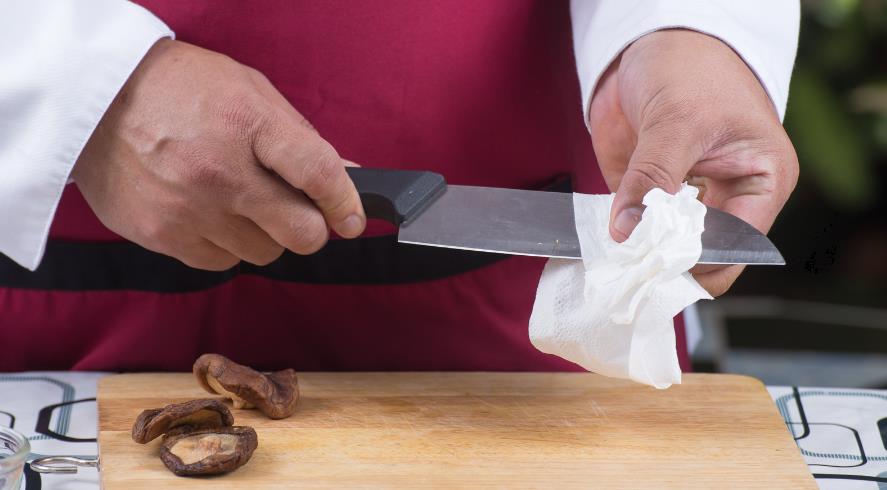
If you work with food, knives are one of the fastest ways bacteria spreads. I’ve seen kitchens fail inspections not because food was bad—but because knives weren’t cleaned and sanitized at the right time.
So let’s answer this clearly, immediately, and correctly.
A knife must be cleaned and sanitized whenever it becomes contaminated, especially when switching between raw and ready-to-eat foods, after each task, and anytime food safety could be compromised.
This guide explains exactly when must a knife be cleaned and sanitized, why it matters, and how food handlers should handle knives to stay compliant and safe.
The Importance of Knife Hygiene

It began with a simple realization: There was so much juice and food bits on my knife after a hard day of cooking. That was the first time I realized how, since then, bacteria easily cross-contaminate from one ingredient to another if my knife is not clean. This idea led me to go further with knife hygiene.
We put all raw meats, vegetables, and fruits on them. All of these can house different species of bacteria and contaminants. If it is not cleaned well, the possibility of cross-contamination and foodborne diseases increases. So, how do we prevent this? Our knives should be cleaned and sanitized at the right moments.
After Handling Raw Meat, Poultry, or Seafood
I always scrub and sanitize my knife instantly after slicing uncooked meats, poultry, or seafood. These contain bacteria such as Salmonella and E. coli, which are nasty bugs we want to protect against! If these bacteria are not well contained, they can easily contaminate other foods, surfaces, or even the skin of your hands.
For example, if I’m preparing a stir-fry and just diced raw chicken for the dish, my first step after transferring the still-raw meat to a skillet would be cleaning that knife with hot, soapy water before using it on any vegetables. This might look like a pain in the ass, but this is crucial to make sure no bacteria from that raw chicken get all up in the veggies.
Between Different Ingredients

I wash my knife well, even when changing between vegetables or fruits. Some things are too powerful for them to live side by side, so they can quickly go all over. Some ingredients have solid flavors or colors that can transfer to others, affecting the taste and presentation of the dish. For instance, if someone chopped an onion and then cut some strawberries without following with a rinse of the knife, it would only get that strange taste combination. Although not dangerous, it does make the food taste disgusting.Some fruits and vegetables may also have surface bacteria or pesticides on them. Lastly, wash your knife between ingredients to prevent leftover chemicals or bacteria from entering the meal.
When Must a Knife Be Cleaned and Sanitized During Food Preparation?
Here’s the deal: every task change matters.
A knife must be cleaned and sanitized after cutting raw meat, poultry, or seafood and before touching ready-to-eat foods like vegetables, fruit, or cooked items. Even a quick switch without cleaning creates cross-contamination risk.
This applies during:
-
Prep shifts
-
Rush hours
-
Batch cooking
-
Line service
If you pause prep, leave the station, or drop a knife, that knife must be cleaned and sanitized again before reuse.
When Must a Knife Be Cleaned and Sanitized for Food Handlers?
Food handlers are held to stricter standards, especially under ServSafe and health department rules.
A knife must be cleaned and sanitized by food handlers:
-
After each completed task
-
After handling raw animal products
-
After touching allergens
-
After extended idle time
-
After contact with unclean surfaces
When must a knife be cleaned and sanitized food handlers ask?
The answer is simple: whenever contamination is possible—no exceptions.
After an extended dormant period
Sometimes, a knife does not leave my kitchen for two weeks if I am on vacation or busy at work. Even if it looks clean, I still always sanitize it before using it again. Slowly, over the years, dust, some moisture, and even small particles of food can build up in there, too. A rinse down will indicate that the knife is prepared to be used again.
When Must a Knife Be Sanitized vs Cleaned?
This is where many kitchens get it wrong.
Cleaning removes visible food debris and grease.
Sanitizing kills harmful microorganisms.
You must always clean before sanitizing. Sanitizing a dirty knife does nothing.
A proper process looks like this:
-
Wash with detergent
-
Rinse with clean water
-
Sanitize using approved solution
-
Air-dry completely
Skipping sanitizing is one of the most common violations inspectors cite.
Why Sanitization Is Key
A clean knife is safe and healthy, so scrubbing with soap will always be necessary. Sanitizing your blade ensures the next level of cleanliness. I discovered this the hard way, as I got mild food poisoning from some unsavory kitchen behavior. Sanitizing means applying a solution that kills any remaining bacteria after washing. I usually use water and bleach or a commercial kitchen sanitizer.
It is also essential when dealing with raw meats or seafood because a simple washing might not remove the bacteria they leave behind. I wash, dry, and dip my knife into the sanitizing solution for one minute, then give it air to breathe. This practice puts my mind at ease, knowing I have done all that is humanely possible to protect our kitchen.
Regular Maintenance and Care

More than just individually cleaning and sanitizing them every day, caring for your knives as part of a regular maintenance routine can be the difference between being an amateur and accomplishing great work. Before using them that day, I always check for wear and tear on all my knives – chips, rust, or dullness. Dull knives are not only inefficient but also dangerous. Using a blunt knife means more pressure is needed to cut, putting you at risk of your hand slipping, etc. I also keep my knives in a knife block on the side of the counter with magnetic strips or in individual sheath blocks. This protects the blade from wear and reduces safety hazards.
What Must a Knife Be Cleaned and Sanitized After?
A knife must be cleaned and sanitized after:
-
Raw meat, poultry, or seafood
-
Switching food types
-
Cutting allergens
-
Being dropped or mishandled
-
Contact with contaminated surfaces
What must a knife be cleaned and sanitized for?
For every situation where bacteria can transfer.
Common Knife Sanitation Mistakes Food Handlers Make
I see these mistakes repeatedly:
-
Wiping knives with towels instead of washing
-
Skipping sanitizing during busy hours
-
Using the same knife “just once more”
-
Forgetting air-dry time
-
Assuming gloves replace sanitation
None of these meet food safety standards.
Frequently Asked Questions
1. When should a knife be cleaned and sanitized?
A knife should be cleaned and sanitized after each task, after handling raw foods, and before touching ready-to-eat items.
2. When must a knife be cleaned and sanitized food handlers?
Food handlers must clean and sanitize knives whenever contamination risk exists, including task changes and idle periods.
3. When must a knife be sanitized?
A knife must be sanitized after cleaning and whenever bacteria may be present, especially after raw food contact.
4. When must a knife be cleaned?
A knife must be cleaned whenever food residue, grease, or contamination is present—before sanitizing.
Final Takeaway: Don’t Guess—Sanitize
If you remember one thing, remember this:
If you’re unsure whether a knife needs cleaning and sanitizing, it probably does.
Following proper knife sanitation isn’t about passing inspections—it’s about protecting people. Clean first. Sanitize always. And never cut corners when food safety is on the line.
