

Building a new home requires coordinating countless details. Most homeowners naturally focus their attention on floor plans, roofing materials, and interior finishes. Outdoor spaces often become an afterthought, pushed to the bottom of the priority list until the final coat of paint dries inside. However, treating the surrounding environment as a secondary concern can lead to costly delays and serious structural issues.
Landscaping is deeply intertwined with the entire construction process. The physical land dictates how a house sits on its foundation, how water flows across the property, and even how energy-efficient the final structure will be. Many people assume landscaping only involves planting flowers and laying sod at the very end of the build. In reality, successful projects integrate outdoor planning before the first shovel hits the dirt.
By addressing the terrain early, you protect your financial investment and create a seamless transition between the indoors and outdoors. Let’s explore six key ways the surrounding environment influences your building journey.
1. Site Preparation and Grading
Before pouring a single ounce of concrete, the land must be carefully prepared. Proper grading ensures the ground slopes gently away from your future home. This initial step is vital for directing water away from the foundation. If the landscaping plan doesn’t account for natural slopes and soil types, you might face severe flooding issues down the line.
Earthmoving equipment will reshape the terrain, setting the stage for both the house and future outdoor amenities. Contractors need to know exactly where retaining walls, patios, and garden beds will go so they can move the dirt efficiently. Doing this earthwork all at once saves time and reduces heavy equipment rental costs.
2. Soil Health and Foundation Stability
The type of soil on your property heavily dictates construction methods. Clay soils expand when wet and shrink when dry, placing immense pressure on foundation walls. Sandy soils drain quickly but might require additional stabilization to support heavy structures.
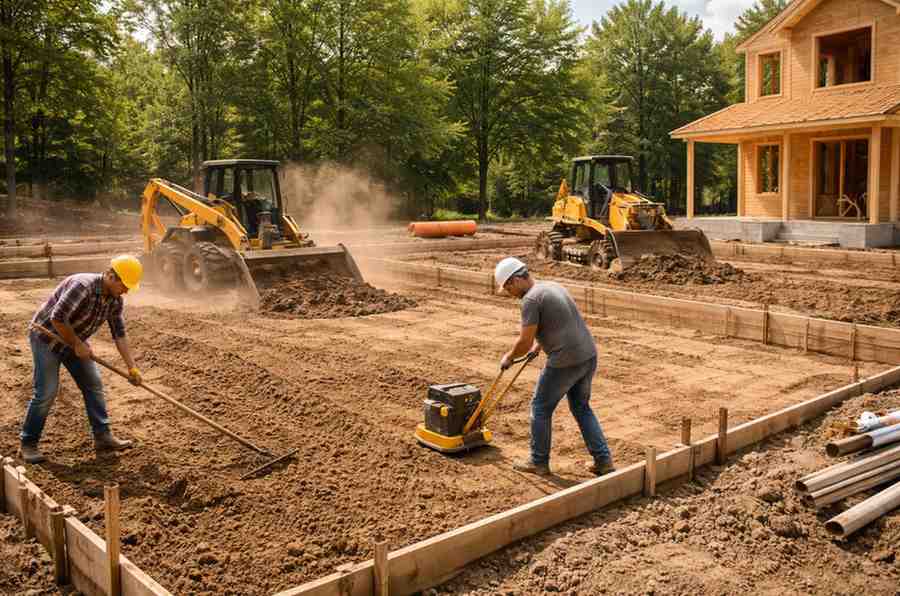
Landscape planning involves testing and amending this soil early on. During excavation, good builders will carefully scrape off the nutrient-rich topsoil and store it safely on site. Once construction wraps up, this topsoil is redistributed to support new grass and plants. Addressing soil composition protects the structural integrity of the home, lets home gardens thrive and ensures that future vegetation has a healthy environment to thrive.
3. Tree Preservation and Removal
Mature trees add immense character and financial value to a property. However, their extensive root systems can easily interfere with plumbing lines, driveways, and foundations. During the planning phase, you must decide which trees to keep and which need to be removed to make way for the house.
If you are building in Utah, consulting an arborist in Salt Lake City can help you identify protected species and assess the overall health of existing trees. Professionals know how to establish protective root zones during construction. This prevents heavy machinery from compacting the soil and inadvertently killing a beautiful tree you desperately wanted to save.
4. Drainage and Water Management
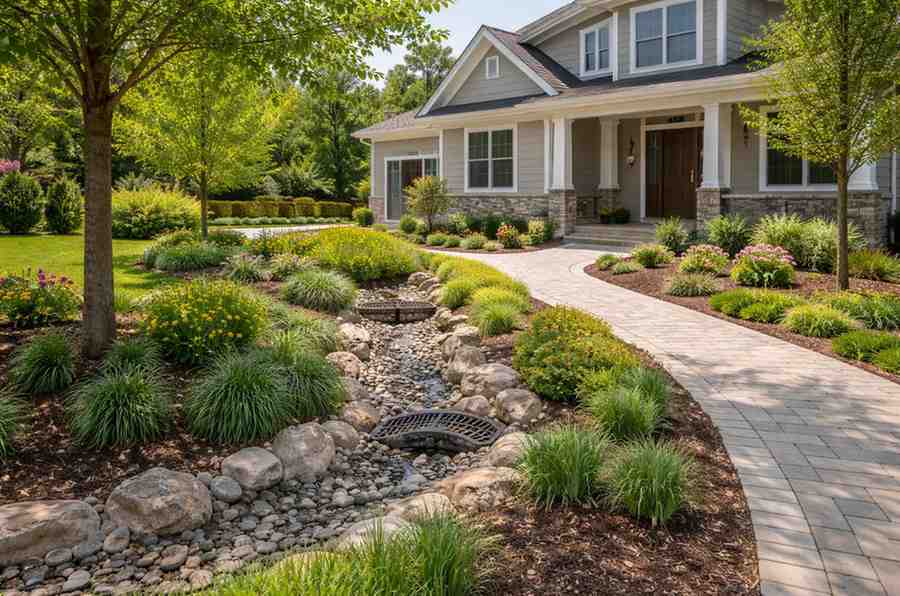
Effective water management goes far beyond initial site grading. A comprehensive landscaping plan incorporates specific drainage solutions like French drains, swales, and permeable paving. When heavy rain hits, water needs a clear path that doesn’t lead directly into your basement or flood your neighbor’s yard.
Designing these systems alongside the home’s construction prevents massive future headaches. It allows builders to seamlessly route roof downspouts into the underground landscape drainage network. Tackling this while the ground is already dug up keeps the entire property dry, safe, and compliant with local municipal runoff regulations.
5. Energy Efficiency and Natural Climate Control
Smart landscaping directly impacts your home’s monthly energy bills. Planting deciduous trees on the southern and western sides of the house provides natural, cooling shade during the hottest summer months. In the winter, these trees drop their leaves, allowing warm sunlight to reach the windows and heat the home. Also supports small space sustainable gardening practises.
Similarly, dense evergreen trees planted strategically can block harsh winter winds from stripping heat away from your walls. When architects and landscape designers collaborate, they position the home and surrounding vegetation to maximize these natural heating and cooling effects. Furthermore, carefully selecting light-colored hardscaping materials for patios can prevent the surrounding area from absorbing too much unwanted summer heat.
6. Curb Appeal and Property Value
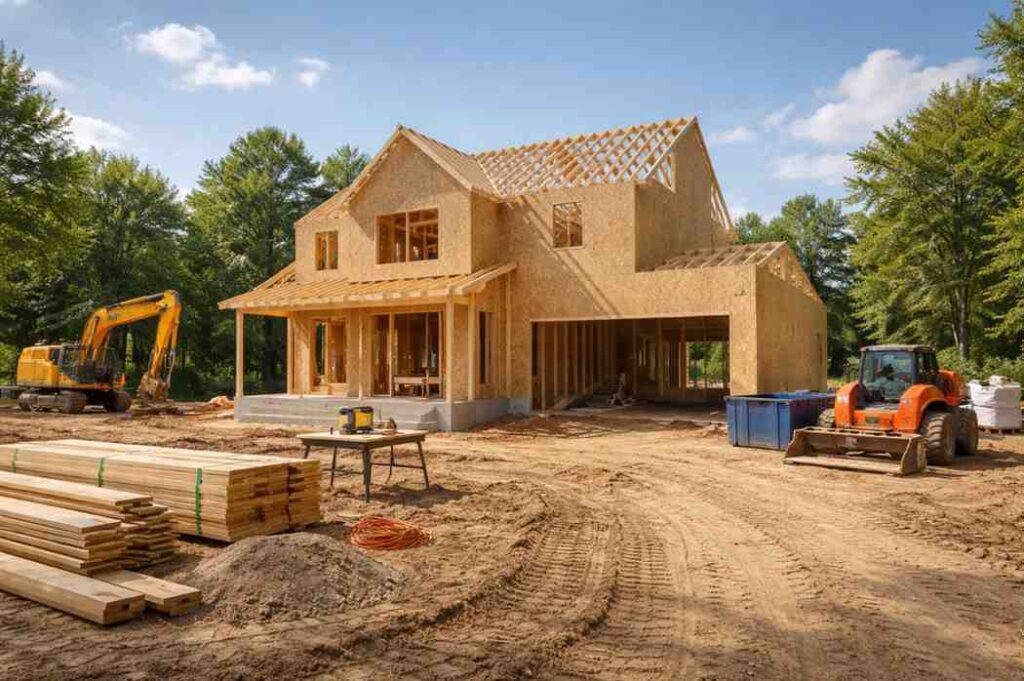
The exterior is the first thing visitors and potential buyers see. A well-executed landscape design elevates the architectural features of your new home and ties the entire property together. Retaining walls, walkways, and garden beds should perfectly complement the exterior siding, stone, and paint colors.
Planning these elements concurrently with the house build ensures a cohesive, intentional look. It also means the driveway, walkways, and porch steps are poured in harmony with the final garden layout. Finishing the landscaping as the house wraps up means you can move into a completely finished property, immediately boosting its neighborhood appeal and overall market value.
Start Planning Your Outdoor Space Today
Building a home is a highly holistic process. The house and the land it sits on must work together in perfect harmony. Addressing the terrain, soil composition, and vegetation early saves you money, prevents hidden structural damage, and results in a much more beautiful final product.
Bring a landscape designer or architect into your initial planning meetings. Discuss your overarching vision for the outdoors alongside your indoor floor plans. By giving the surrounding environment the attention and respect it deserves, you guarantee a smoother construction project and a home that truly belongs in its natural setting.
